The First Click Is the New Waiting Room

02/04/2026

Blog
Artificial Intelligence, Urgent Care Patient Engagement

A waiting room used to tell patients almost everything they needed to know about a healthcare experience. Was it calm or chaotic? Organized or confusing? Modern or outdated? Patients often formed opinions about the quality of care before they ever saw a provider.

Today, many of those judgments happen earlier. They happen online.

Before patients arrive, they are already evaluating the experience through:

  • Search results
  • Scheduling flows
  • Mobile usability
  • Wait time visibility
  • Reviews
  • Confirmation texts
  • Intake forms

The first click has become the new waiting room.

And in urgent care, where convenience heavily influences patient decisions, that first interaction increasingly determines whether patients continue the journey at all.

Patient Access Starts Long Before Arrival

Urgent care has always competed on speed and convenience, but patient expectations have evolved well beyond simply being seen quickly. Patients now expect healthcare experiences to feel connected and intuitive from the very beginning.

That means patient access is no longer limited to physical proximity or clinic hours. It also includes:

  • How easy it is to schedule
  • Whether information feels clear
  • How quickly patients can get answers
  • Whether the process feels modern and responsive

A difficult digital experience creates friction immediately. And unlike a crowded physical waiting room, digital frustration is invisible to the clinic. Patients often leave before staff ever know they were considering a visit.

That is what makes the digital front door so important. It is not just a marketing touchpoint. It is part of the patient experience itself.

Small Friction Points Create Big Consequences

Most patients are not abandoning the scheduling process because of one catastrophic issue. They leave because of small frustrations that stack together:

  • Too many required fields
  • Unclear scheduling availability
  • Repetitive intake steps
  • Confusing wait expectations
  • Slow mobile experiences
  • Lack of confirmation or follow-up

Individually, those moments may seem minor. Together, they create enough hesitation for patients to look elsewhere.

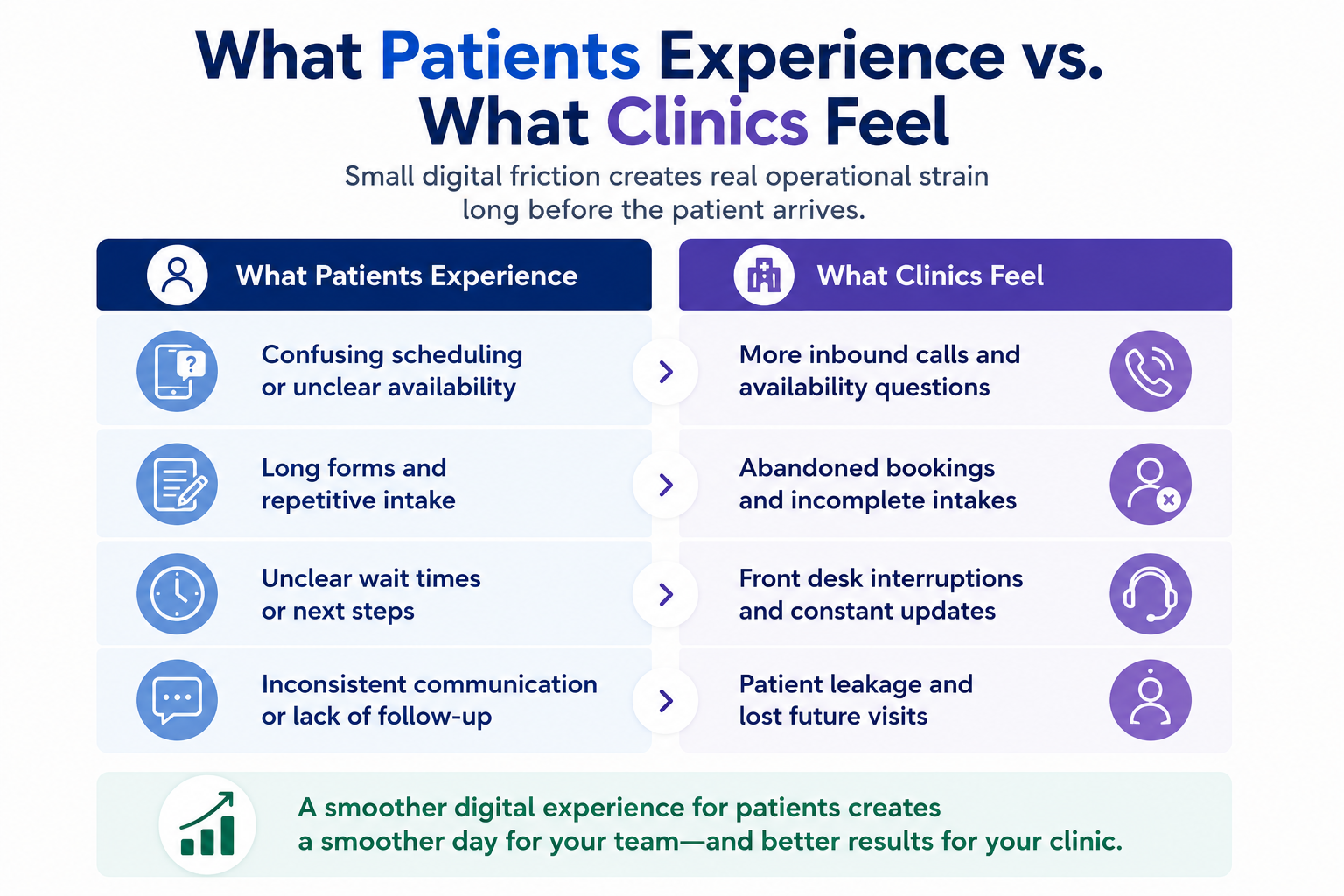
When scheduling becomes difficult, the burden shifts back to the clinic:

  • More inbound calls
  • More scheduling confusion
  • More front desk interruptions
  • More abandoned bookings
  • More patient leakage

The operational impact starts before the patient ever arrives.

Learn about The Hidden Cost of Missed Calls in Urgent Care and How to Fix It >>

Infographic compares patient experiences, like confusing scheduling and long forms, with clinic challenges, such as inbound calls and abandoned bookings, highlighting the need for improved digital tools.


Digital Patient Experience Shapes Perception Quickly

Patients often associate digital convenience with organizational competence. When online scheduling feels simple and communication feels timely, patients tend to assume the rest of the experience will feel organized as well.

The reverse happens too.

A disconnected or frustrating digital experience can immediately lower confidence before care even begins.

This is one reason patient experience has become so closely connected to operational design. Patients may never describe it in workflow terms, but they absolutely notice when:

  • Wait expectations feel unclear
  • Intake feels repetitive
  • Communication feels inconsistent
  • Staff appear overwhelmed
  • Information is difficult to access

Those moments shape trust and, increasingly, reputation.

Research continues to show how strongly digital interactions influence healthcare decisions:

  • 84% of patients trust online reviews as much as personal recommendations
  • 75% use reviews early in the care-selection process

That means the patient experience now starts influencing reputation before the visit even begins.

Learn how Every Urgent Care Touchpoint Is a Reputation Moment >>


Please accept preferences cookies to view this video.

Online Scheduling Is Now Part of Care Delivery

For many organizations, online patient scheduling started as a convenience feature. Today, it functions more like operational infrastructure.

A well-designed scheduling experience can:

  • Reduce front desk pressure
  • Improve patient flow
  • Lower call volume
  • Increase visit completion
  • Create smoother intake experiences

A poorly designed one can create operational problems throughout the rest of the day.

This is why the digital patient experience can no longer be separated from operational efficiency. The systems patients interact with before arrival directly influence what happens inside the clinic afterward.

The clinics creating the strongest experiences are often not the ones adding the most technology. They are the ones using technology to remove unnecessary friction.


The Best Digital Experiences Feel Almost Invisible

Patients are not looking for complicated systems. They are looking for experiences that feel easy. The strongest digital front doors usually share a few things in common:

  • Clear scheduling options
  • Mobile-friendly workflows
  • Transparent communication
  • Simple intake processes
  • Faster follow-up
  • Consistent expectations throughout the visit

When those elements work together, the experience feels connected. Patients spend less time figuring out what to do next and more time feeling confident in the process.

That benefits staff too. Reducing friction before arrival often reduces operational strain throughout the rest of the visit experience.

Perfect the patient journey. Read From Click to Care: Designing a Modern Urgent Care Patient Journey >>

The Waiting Room Did Not Disappear. It Moved.

Patients still form opinions before they see a provider. They still decide whether the experience feels calm, modern, organized, and trustworthy before treatment begins.

The difference is where those moments happen. Today, they happen during:

  • Search
  • Scheduling
  • Intake
  • Communication
  • Confirmation
  • Follow-up

The waiting room did not disappear. It moved.

Today, the patient experience begins long before arrival, and the organizations that reduce friction across scheduling, communication, and follow-up will be the ones building stronger patient relationships over time.

Create a more connected patient journey from the first click forward.

Turn Clicks Into Visits

Watch our Webinar on Patient Experience and Growth
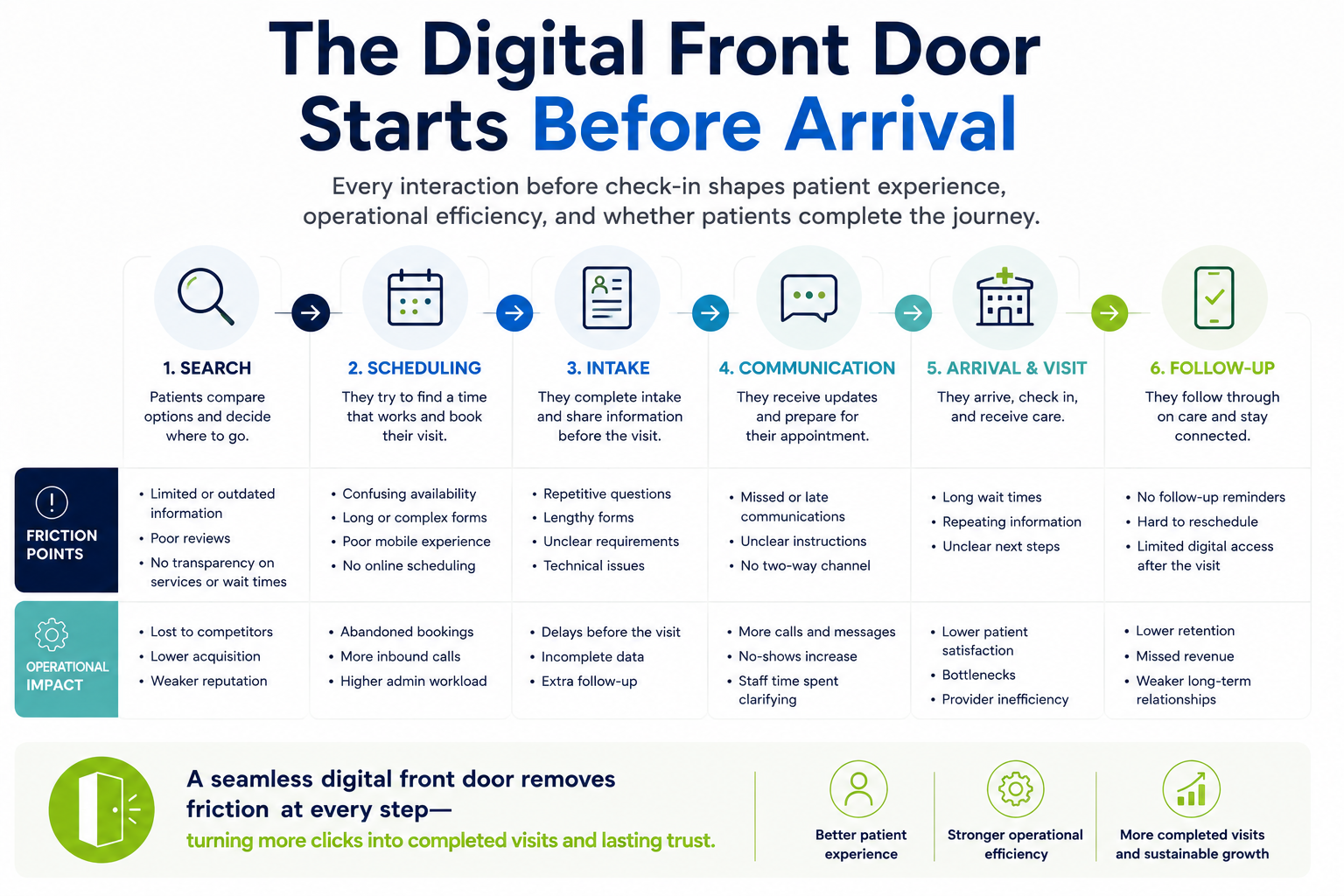
Infographic explaining six digital front door steps in patient care: search, scheduling, intake, communication, arrival & visit, and follow-up, with friction points and operational impacts.

Related Resources

A patient and a healthcare professional discuss information displayed on a tablet during a medical consultation.

← Back to Resources How Can AI Be Used in Healthcare Operations? 04/17/2026 BlogArtificial Intelligence, Urgent Care Operations When people talk about AI in healthcare,

Sign Up for the Urgent Care Minute

Join over 20,000 healthcare professionals who receive our monthly newsletter.

Sign Up

Nurse Reviewing Urgent Care EMR

Sign up to get monthly resources right to your inbox

Join more than 20,000 healthcare pros who score our free tips, tricks, guides, and the latest industry news.

By signing up, you agree to receive marketing emails from Experity and agree to our Privacy Policy. You can unsubscribe at any time.