
Teleradiology: Basics, Benefits, and Considerations
Learn whether teleradiology is right for your urgent care and what to consider when choosing a service provider
When imaging volumes grow, healthcare facilities find it harder to keep radiology coverage consistent. Extended clinic hours, rising patient demand, and ongoing radiologist shortages make it difficult for imaging teams to keep studies moving.
Teleradiology solutions help address that challenge by allowing medical images to be securely transmitted to radiologists who interpret them remotely. This approach helps facilities expand access to radiology expertise while maintaining reliable turnaround times.
Today, teleradiology services support hospitals, urgent care centers, imaging centers, and specialty clinics across the country.
The sections below break down how teleradiology solutions operate, the services and benefits they deliver, and the factors healthcare teams should evaluate when choosing a teleradiology partner.

What is Teleradiology?
Teleradiology refers to the process of sending medical images from one location to another so they can be interpreted by a radiologist working remotely. Images such as X-rays, CT scans, MRIs, and ultrasounds are captured at a healthcare facility and transmitted through secure digital systems.
A radiologist reviews the study and sends back a diagnostic report that helps clinicians determine the next step in patient care.
Although the technology behind teleradiology has evolved, the basic workflow remains simple and reliable. Most systems follow a similar sequence.
- Imaging studies are captured using digital imaging equipment
- Images are transmitted securely through a radiology platform
- A remote radiologist reviews the study and prepares an interpretation
- A diagnostic report is returned to the originating provider
Because interpretation can happen remotely, facilities can keep radiology coverage consistent even when a radiologist is not physically present.
Turn Radiology Reports Into Confident Clinical Decisions
Radiology reports often hold subtle details that can change next steps. Strengthen diagnostic confidence by knowing what to scan for, how to interpret findings, and where misreads most commonly happen in urgent care.

Why Healthcare Facilities Use Teleradiology Services
Many facilities begin exploring teleradiology when imaging demand starts to stretch their internal teams. Extended hours, new locations, and fluctuating patient volumes can all make it harder to keep up.
In most cases, teleradiology is introduced to solve a specific operational challenge rather than replace existing radiology staff.
Facilities often turn to teleradiology when:
- Overnight or weekend coverage is needed but there is no dedicated night radiology team
- Imaging volumes increase after adding clinics, service lines, or extended hours
- A location struggles to recruit or retain onsite radiologists
- Emergency departments or urgent care centers need faster imaging interpretation
- A facility occasionally needs subspecialty expertise for complex studies
By distributing imaging studies across a network of radiologists, care teams can maintain reliable diagnostic support even during busy periods.
Benefits of Using Teleradiology Services
Many facilities first adopt teleradiology to address coverage or staffing challenges. But once the service is in place, the benefits often extend further. Remote interpretation can improve how imaging workflows function across an organization and help clinicians receive results sooner.
For many facilities, these advantages are why teleradiology has become a routine part of everyday imaging operations:
Lower Operational Costs
Teleradiology allows clinics to access board-certified radiologists without hiring full-time staff. Instead of maintaining in-house coverage for every shift, clinics can rely on remote interpretation when they need it, helping control staffing costs while still providing reliable imaging services.
Continued Imaging Interpretation During Evenings and Overnight Hours
Because teleradiology providers operate with distributed radiologist networks, imaging studies can continue to be reviewed outside traditional clinic hours. This helps ensure clinicians receive interpretations even during evenings, weekends, or overnight shifts.
Increase Patient Satisfaction
Patients expect excellent service from their healthcare providers. Contracting with the right teleradiology service can help meet these expectations by enabling quick diagnosis and treatment, simplifying the patient experience, and consolidating billing. This makes the process easier for patients, fostering long-term relationships and generating more referrals and business for your clinic.
Access to Subspecialty Radiologists for Complex Cases
Some imaging studies require more specialized expertise. Teleradiology services allow clinicians to consult with radiologists who have subspecialty training, helping ensure complex studies receive the appropriate level of interpretation.
Faster Imaging Interpretations for Quicker Clinical Decisions
When imaging results return quickly, clinicians can move faster from diagnosis to treatment. Faster interpretation helps providers make care decisions sooner and often allows patients to leave the clinic with answers instead of waiting for follow-up calls.
Consistent Radiology Support Across Locations and Fluctuating Demand
Teleradiology helps clinics maintain reliable imaging interpretation whether they operate a single location or multiple sites. It also provides additional support when patient volumes increase unexpectedly, helping imaging workflows stay consistent even during busy periods.
Reduce Imaging Bottlenecks Without Expanding Your Team
Staffing constraints don’t have to stall patient flow. See how clearer roles around X‑ray interpretation can help urgent care teams shorten visits, reduce callbacks, and make faster clinical decisions without sacrificing quality.
Types of Teleradiology Services
Once a facility decides to use teleradiology, the next step is understanding which reporting services fit different clinical needs.
Common service types include preliminary reads, final reads, STAT reads, subspecialty reads, and after-hours coverage. The right mix helps ensure imaging studies are interpreted quickly, accurately, and at the appropriate level of expertise.
Teleradiology Reporting Services and Clinical Workflows
Teleradiology reporting services help healthcare teams manage imaging interpretation efficiently across urgent care, hospitals, imaging centers, and outpatient facilities. Depending on the clinical situation, providers may receive preliminary interpretations for immediate treatment decisions, final reports for the patient record, or subspecialty reviews for more complex studies.
Reliable reporting plays an important role in both patient care and operational performance. Delayed or inconsistent reports can slow discharge decisions, create communication gaps, and increase clinical risk. Fast, accurate reporting helps clinicians move patients through care more efficiently while maintaining confidence in diagnostic decisions.
Many healthcare organizations evaluate teleradiology reporting services based on:
- Turnaround times for STAT and routine studies
- Access to board-certified and subspecialty radiologists
- Reporting consistency across locations and providers
- Integration with PACS, RIS, and EHR systems
- Communication workflows between clinicians and radiologists
The right reporting workflow helps ensure imaging results are delivered quickly, documented clearly, and integrated smoothly into the broader patient care process.
How Teleradiology Companies Deliver Imaging Interpretation
Behind every teleradiology service is a combination of clinical expertise and technology infrastructure. Radiologist networks, secure image transmission systems, and workflow platforms all work together to support remote interpretation.
Most teleradiology companies maintain networks of board-certified radiologists who are licensed across multiple states and credentialed with healthcare facilities. Imaging studies are transmitted through secure systems and routed to available radiologists for interpretation.
Technology platforms help manage the process by tracking turnaround times, routing exams efficiently, and ensuring images are transmitted securely.
Many providers also use structured quality assurance processes designed to maintain reliable diagnostic accuracy. These often include peer review programs and performance monitoring that help maintain consistent reporting standards.
Increase X‑Ray Volume by Helping Patients Find You First
Many urgent care centers offer X‑ray services, but patients do not always know it. This guide shows how to use high‑intent search keywords to attract patients looking for X‑rays and convert that demand into visits without changing staffing or hours.

Key Features of Modern Teleradiology Solutions
Technology plays an important role in how smoothly a teleradiology service operates. A well-designed platform helps ensure imaging studies move quickly from capture to interpretation without creating additional work for care teams.
When evaluating providers, healthcare teams often look for capabilities that support efficient workflows and clear communication.
Important features often include:
- Integration with PACS, RIS, and electronic health record systems
- Secure transmission of imaging data that meets healthcare privacy requirements
- Intelligent study routing that funnels exams to available radiologists
- Tools that track turnaround time and interpretation performance
- Communication options that allow clinicians to consult directly with radiologists when needed
The right combination of technology and clinical expertise helps ensure imaging studies are interpreted efficiently and accurately.
How Different Healthcare Settings Use Teleradiology
Teleradiology supports a wide range of healthcare environments. Each setting has its own imaging workflows, patient volumes, and staffing needs. Because remote interpretation is flexible and scalable, it can support organizations ranging from large hospital systems to small outpatient clinics.
Hospitals
Hospitals often rely on teleradiology to supplement internal radiology departments and maintain coverage outside standard hours.
- Overnight interpretation for emergency department imaging studies
- Subspecialty expertise for complex diagnostic cases
- Additional reading capacity during high imaging demand
- Support for hospitals with limited in-house radiology staffing
Imaging Centers
Outpatient imaging centers often use teleradiology to maintain reliable reporting performance.
- Access to subspecialty radiologists for complex studies
- Flexible reading capacity during busy periods
- Consistent turnaround times for referring providers
- Expanded diagnostic capabilities without increasing staff
Urgent Care Centers
Urgent care clinics frequently use teleradiology when a radiologist is not available on site.
- X-ray interpretation for fractures and other common injuries
- Rapid results that support same-visit diagnosis and treatment
- Imaging support during extended evening or weekend hours
- Access to radiology expertise without adding full-time staff
- Second opinions on complex X-rays
Rural and Community Healthcare Facilities
Facilities in rural areas may not always have a radiologist on site. Teleradiology helps ensure imaging interpretation remains available.
- Access to board-certified radiologists regardless of location and time of day
- Expanded imaging services in underserved communities
- Additional diagnostic support for local clinicians
- Reliable interpretation even when local staffing is limited
Stay Compliant as B‑Read Requirements Tighten
Protect your occupational medicine program from delays and audit risk. Understand when B‑Reads are required and why access to certified readers matters more than ever.
How to Evaluate Teleradiology Providers
Choosing a teleradiology partner can have a direct impact on imaging operations. The right service provider helps care teams work efficiently while ensuring clinicians receive timely diagnostic information.
For many care teams, the challenge is knowing how to compare service providers when they appear similar on the surface. When evaluating teleradiology companies, it helps to look at both clinical expertise and the technology supporting the service.
Radiologist Credentials and Licensing
Radiologist expertise is one of the most important considerations. Facilities should understand who will be interpreting their studies and what credentials those radiologists hold.
Questions to consider:
- Are radiologists board-certified
- Are they licensed in the states where your patients are treated
- Do they have experience interpreting the types of studies your facility performs
Technology and System Integration
Technology plays an important role in how smoothly a teleradiology service operates. Integration with existing systems can reduce administrative burden and help imaging workflows run efficiently.
Questions to consider:
- How are imaging studies transmitted securely
- Does the platform integrate with PACS, RIS, or electronic health record systems
- How are studies routed to available radiologists
Quality Assurance and Communication
Strong quality assurance processes help maintain diagnostic accuracy over time. Communication between clinicians and radiologists can also be important when interpreting complex studies.
Questions to consider:
- What quality assurance or peer review processes are in place
- Can clinicians communicate directly with radiologists when clarification is needed
- How are discrepancies or reporting concerns handled
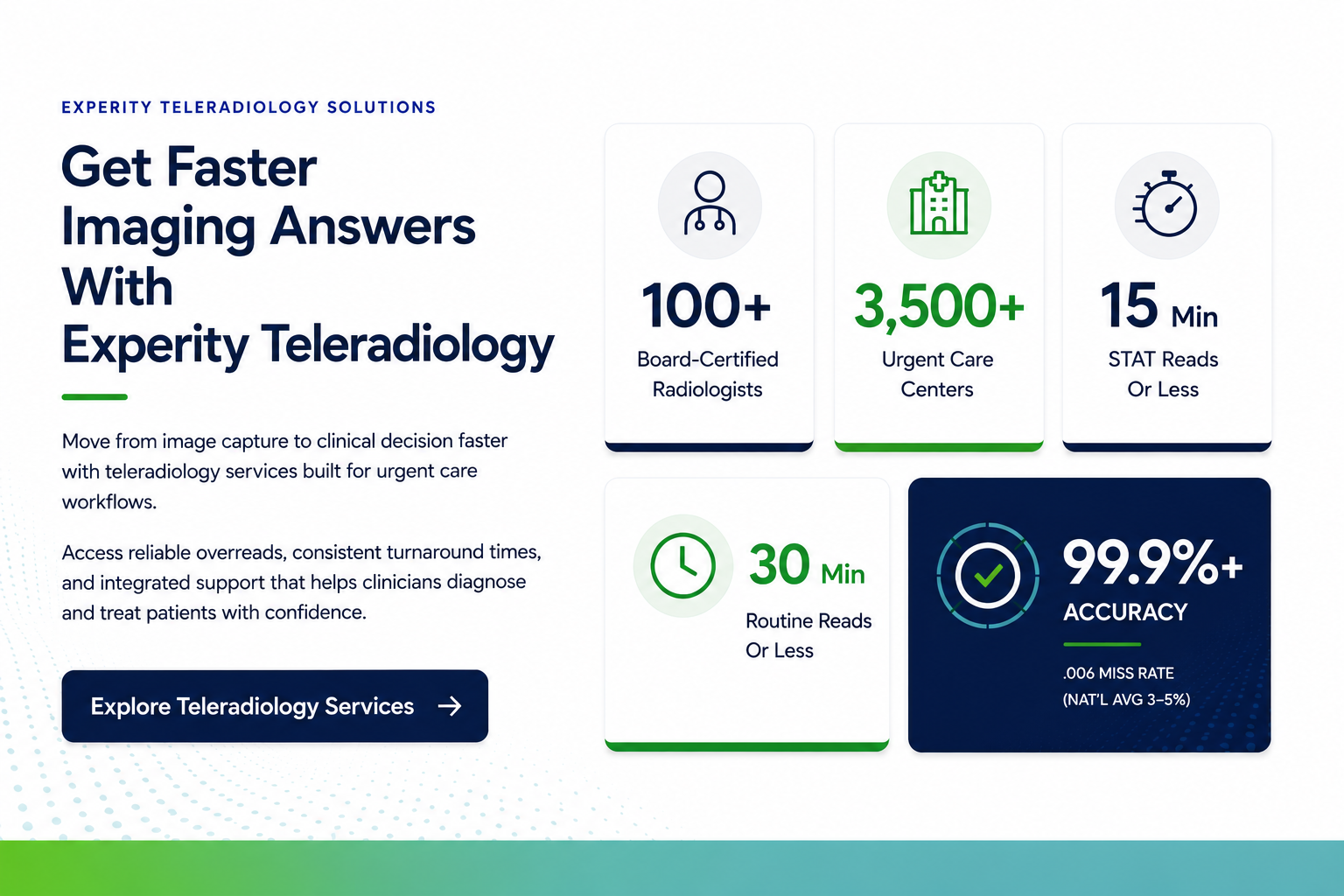
Turnaround Times
Reliable turnaround times help clinicians move quickly from imaging to diagnosis. Providers should be able to clearly define expectations for both routine and urgent studies.
Questions to consider:
- What turnaround times are expected for routine studies
- How quickly are STAT exams interpreted
- How are turnaround times tracked and reported
Subspecialty Expertise
Certain imaging studies require specialized interpretation. Access to subspecialty radiologists can be important for facilities that handle more complex cases. The ability to easily consult other specialists ensures accurate diagnosis and treatment.
Questions to consider:
- Are subspecialty radiologists available for studies such as neuroradiology or musculoskeletal imaging
- How are complex studies routed to the appropriate specialist or available for consultations
Learn more about how to compare top radiology companies
The Future of Teleradiology Solutions
Technology continues to expand what is possible with remote radiology services. Artificial intelligence, cloud-based imaging platforms, and workflow automation are already shaping how imaging studies are prioritized and interpreted.
AI tools can assist radiologists by identifying potential abnormalities and flagging urgent cases more quickly. Cloud-based infrastructure also allows imaging data to move more easily between facilities, supporting collaboration across care teams.
As these technologies continue to evolve, teleradiology will likely become even more integrated into everyday clinical workflows. The goal remains the same: helping clinicians move from imaging to diagnosis and treatment as efficiently as possible.
Frequently Asked Questions About Teleradiology
What are teleradiology services
Teleradiology services allow facilities to send diagnostic medical images such as X-rays, CT scans, and MRIs to remote radiologists for interpretation.
How do teleradiology solutions work
Teleradiology solutions transmit imaging studies through secure digital networks to radiologists who review the images remotely and return diagnostic reports.
Who uses teleradiology services
Hospitals, urgent care centers, imaging centers, and specialty clinics commonly use teleradiology services to maintain radiology coverage and improve turnaround times.
How do healthcare facilities choose between teleradiology companies
Facilities typically evaluate providers based on radiologist credentials, turnaround times, technology integration, service availability, and quality assurance processes.
What imaging studies can be interpreted through teleradiology
Teleradiology services can interpret many types of imaging studies including X-rays, CT scans, MRIs, ultrasounds, and other diagnostic imaging exams.