Pillar 1: Consistency
Most imaging workflows don’t fail because someone made the wrong decision. They drift.
A process that worked well for one clinic gets adapted somewhere else. A new provider develops a different documentation habit. One location handles overreads differently after adding evening hours. Another creates its own callback process because it fits the local team.
None of those changes feels particularly important. But taken together, they quietly reshape how the organization delivers care.
That’s one reason two urgent care organizations with similar technology, comparable providers, and the same radiology partner can produce very different patient experiences. The equipment may be identical. The workflow is not.
Consistency is the first pillar of imaging excellence because it protects against that gradual drift. It gives providers, radiologists, and operational leaders a shared way of working that remains dependable as clinics grow, staffing changes, and imaging volumes increase.
Consistency Begins With Clear Expectations
Every consistent imaging program starts with shared expectations. Leaders define how imaging moves through the organization, from overread policies and turnaround standards to communication, documentation, and patient follow-up. Those decisions become the operating model that providers, radiologists, and clinic staff rely on every day.
When expectations are clear, the work becomes more predictable. Providers know what happens after an image is acquired. Radiologists receive the clinical context they need. Staff understand who owns patient communication if additional findings emerge. Fewer operational questions interrupt the workday because the process has already answered them.
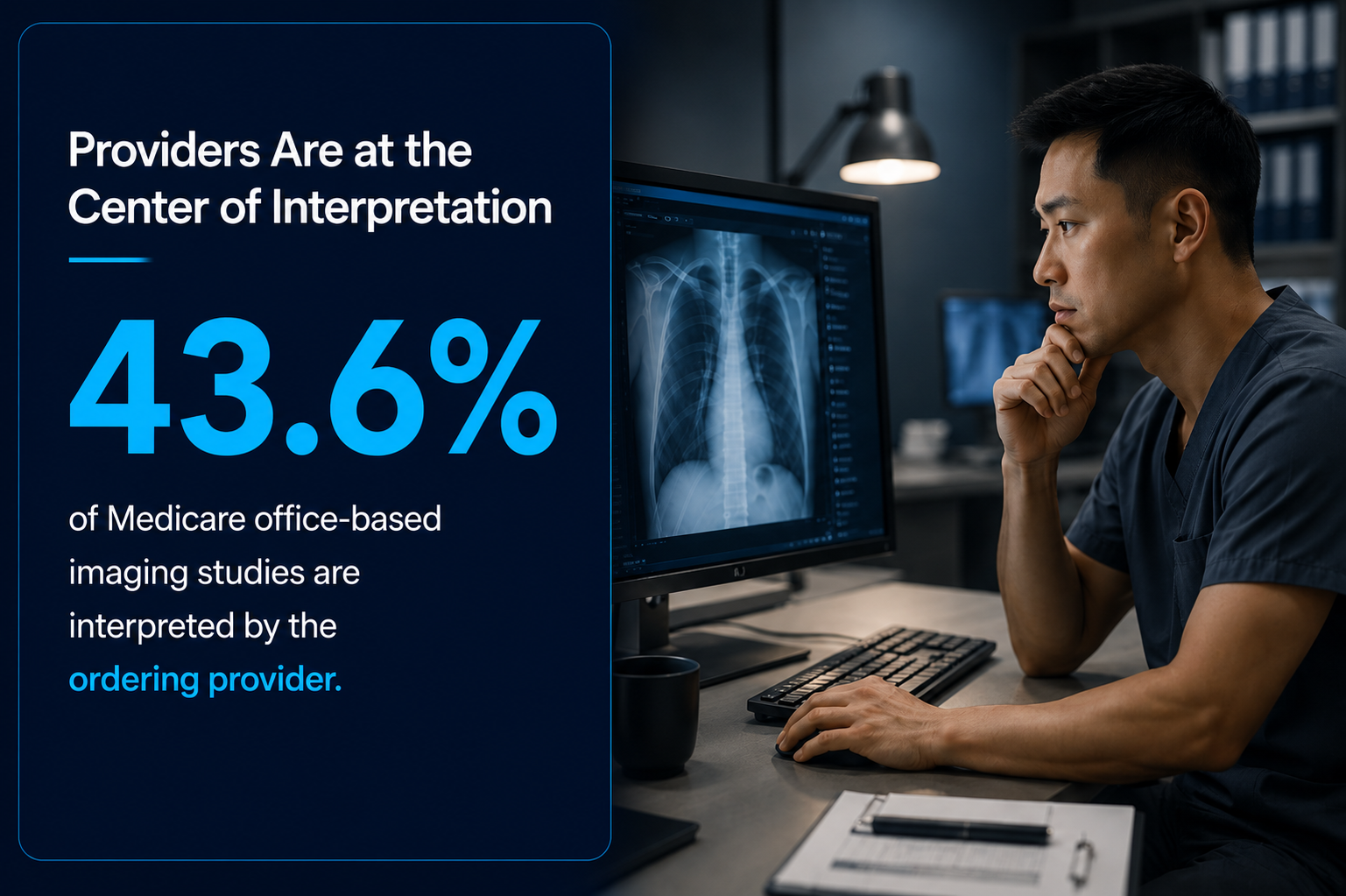
Patients rarely notice those expectations directly, but they experience the results throughout their visit. Care feels coordinated. Communication is timely. Follow-up happens when it’s needed. Behind each of those experiences is a workflow that produces the same standard of care regardless of who is working or where the patient is seen.
Growth Has a Way of Revealing Hidden Variation
Small organizations often compensate for inconsistent workflows without realizing it. Experienced team members answer questions quickly, communication happens naturally, and local knowledge fills the gaps left by undocumented processes.
Growth changes those conditions.
Additional clinics, new providers, higher patient volumes, and expanded imaging services introduce more people into the workflow. Informal processes become harder to sustain because fewer people share the same assumptions about how work gets done.
Leaders usually notice the symptoms before they identify the cause. Turnaround times vary between clinics. Follow-up processes become inconsistent. Provider onboarding takes longer. Operational questions surface more frequently than they did a year ago.
Those challenges are becoming more significant across healthcare. Researchers from the Harvey L. Neiman Health Policy Institute project continued growth in imaging demand alongside long-term radiologist workforce constraints, increasing the importance of efficient, repeatable imaging operations.
Organizations that scale successfully rarely depend on adding more resources alone. They build workflows that continue performing as the organization changes.
Reliable Workflows Depend on Coordination
Every imaging study passes through several teams before a patient’s care is complete. Providers order the study, technologists acquire the image, radiologists interpret it, clinic staff communicate results, and patients receive follow-up if additional care is needed. Each step relies on accurate information from the one before it, making coordination just as important as the quality of the interpretation itself.
Consistency is tested every time work moves from one person to another. Clinical history needs to accompany the image. Questions need a clear path back to the ordering provider. New findings need to reach both the care team and the patient without unnecessary delays. When those transitions are clearly defined, the workflow continues moving forward without interruption, even during busy clinic days.
Patients never see those handoffs taking place. They experience the outcome. Care feels coordinated, communication is timely, and the next step is clear because everyone involved understands their role in the process.
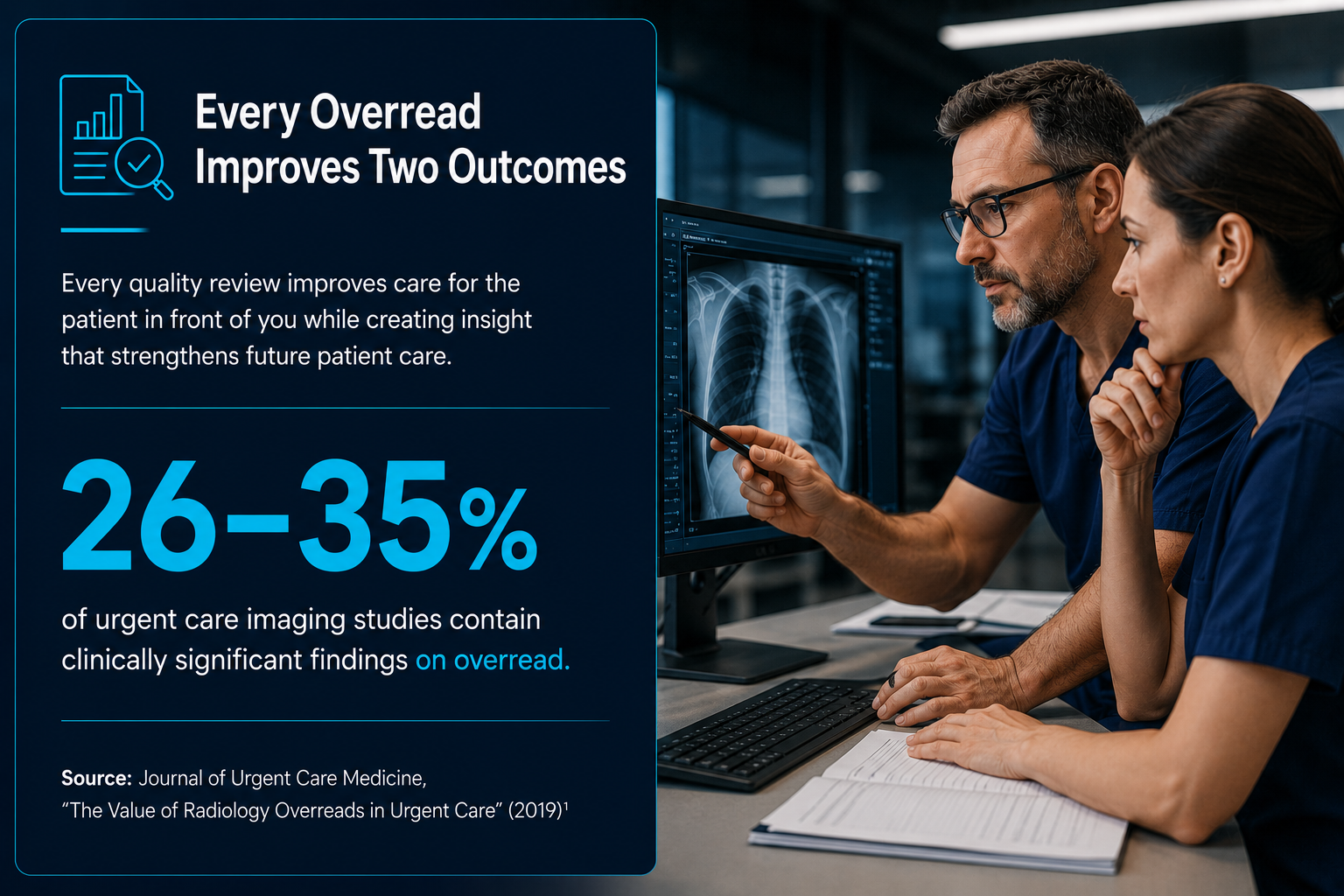
Every Overread Should Improve More Than One Case
Quality review serves an immediate clinical purpose by identifying discrepancies between preliminary and final interpretations. Those discrepancies can change patient management, making structured overreads an important part of imaging quality.
A well-run imaging program doesn’t stop there.
Every overread also creates an opportunity to learn. One case may uncover a documentation issue. Another may highlight the need for additional clinical history or provider education. Over time, recurring patterns reveal where workflows can be strengthened, communication can improve, and quality initiatives should be focused.
Looking across dozens or hundreds of overreads changes the conversation. Leadership begins to see trends instead of isolated cases, making it easier to distinguish one-time events from opportunities that affect the entire organization.
That perspective changes the purpose of quality review. Each overread still helps the patient in front of you, but it also contributes to a stronger imaging program for every patient who follows.
Consistency Requires Ongoing Attention
No workflow remains static. Organizations hire new providers, adopt new technologies, expand services, and respond to changing patient expectations. Every change introduces the possibility that local adaptations gradually become organizational habits.
Maintaining consistency requires leadership to periodically step back and examine how imaging actually operates across the enterprise. Policies may remain unchanged while workflows evolve in practice. Documentation expectations may differ between clinics despite using the same technology. Communication pathways may function differently depending on staffing or local preference.
Questions like these often reveal opportunities before they appear on performance dashboards:
- Would two patients with the same presentation experience the same imaging workflow at different clinics?
- Do providers describe the review process the same way regardless of where they work?
- Where do communication delays occur most often?
- Which operational decisions still rely on individual experience instead of established process?
- Does leadership have visibility into workflow variation across every location?
The answers provide a clearer picture of consistency than turnaround times alone ever could.
Consistency Creates Capacity
Reliable workflows make it easier to introduce new technology, expand imaging services, open additional clinics, and strengthen quality programs without reinventing the process each time. When the operating model is consistent, new capabilities have a stronger foundation to build on.
That’s why consistency sits at the foundation of the Imaging Excellence Framework. It supports every pillar that follows, making it easier to improve timeliness, strengthen quality, create more dependable follow-up, and give leadership a clearer picture of performance across the organization.
Ready to strengthen imaging consistency across your organization?
See how Experity Teleradiology helps urgent care organizations standardize imaging workflows, improve provider collaboration, and deliver more consistent patient experiences.