Pillar 2: Timeliness
Most discussions about imaging turnaround times focus on speed. Faster reports help providers make decisions sooner, reduce patient wait times, and keep clinics moving efficiently. Those benefits are real, but they only tell part of the story.
An imaging report doesn’t have the same value at every point in the patient visit.
A report that arrives while the provider is still evaluating the patient can influence diagnosis, treatment decisions, and discharge planning in real time. The same report delivered after the patient has left may still be clinically valuable, but it creates a different set of responsibilities. Staff members may need to make follow-up calls. Documentation may need to be updated. Patients who believed their visit was complete suddenly have new questions or instructions.
Timeliness is about more than report speed. The real question is whether imaging information reaches providers while they can still use it to shape care.
Urgent care has always been built around efficient decision-making. Providers assess symptoms, order imaging, develop treatment plans, and move patients through the clinic in a matter of hours, not days. When imaging supports that process, care feels coordinated. When imaging lags behind it, the effects extend far beyond radiology. Delays begin influencing patient throughput, provider workflow, follow-up requirements, and the overall experience of care.
The most mature imaging programs recognize that distinction. Rather than viewing timeliness as a standalone metric, they evaluate how effectively imaging supports clinical decisions when those decisions are actually being made.
Every Minute Doesn’t Carry the Same Value
Urgent care requires rapid clinical decisions. Providers evaluate symptoms, perform examinations, order imaging, and develop treatment plans within a single encounter. The value of an imaging interpretation changes depending on when it reaches that process.
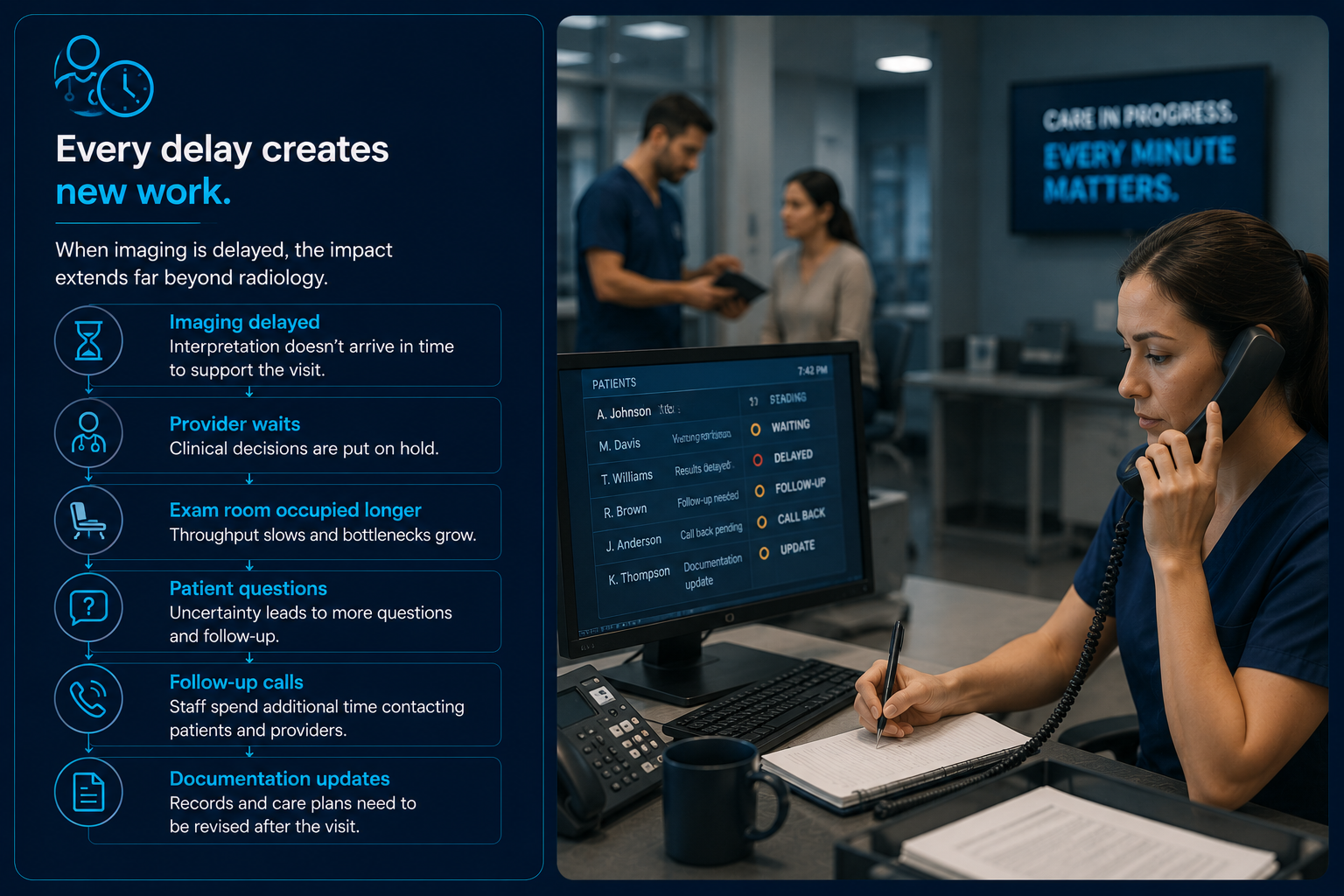
A report that arrives while the patient is still in the exam room may confirm a diagnosis, rule out a fracture, or change the treatment plan entirely. The same report delivered thirty minutes later may still be accurate, but it creates a different workflow. Patients may need another phone call. Documentation must be updated. New instructions have to be communicated after the visit has already ended.
That distinction rarely appears in turnaround reports. Average response times don’t show whether providers consistently have the information they need before making clinical decisions. Looking at timeliness through that lens creates a much clearer picture of how imaging supports patient care.
Imaging Creates the Most Value During the Visit
Every urgent care visit relies on a sequence of connected activities. Registration leads to triage. Triage leads to provider evaluation. Imaging supports diagnosis. Treatment leads to discharge. The patient experiences all those steps as a single visit, even though several teams contribute along the way.
When imaging slows, the effects extend well beyond radiology. Providers spend more time waiting before finalizing treatment plans. Exam rooms remain occupied longer than expected. Staff members answer additional questions from patients wondering when results will be available. Delays ripple through the rest of the clinic because each part of the visit depends on the one before it.
Viewing imaging as one component of a larger workflow often reveals opportunities that turnaround reports alone cannot. The question shifts from “How quickly are reports completed?” to “How consistently does imaging help the clinic keep care moving?”
Peak Demand Tells the Real Story
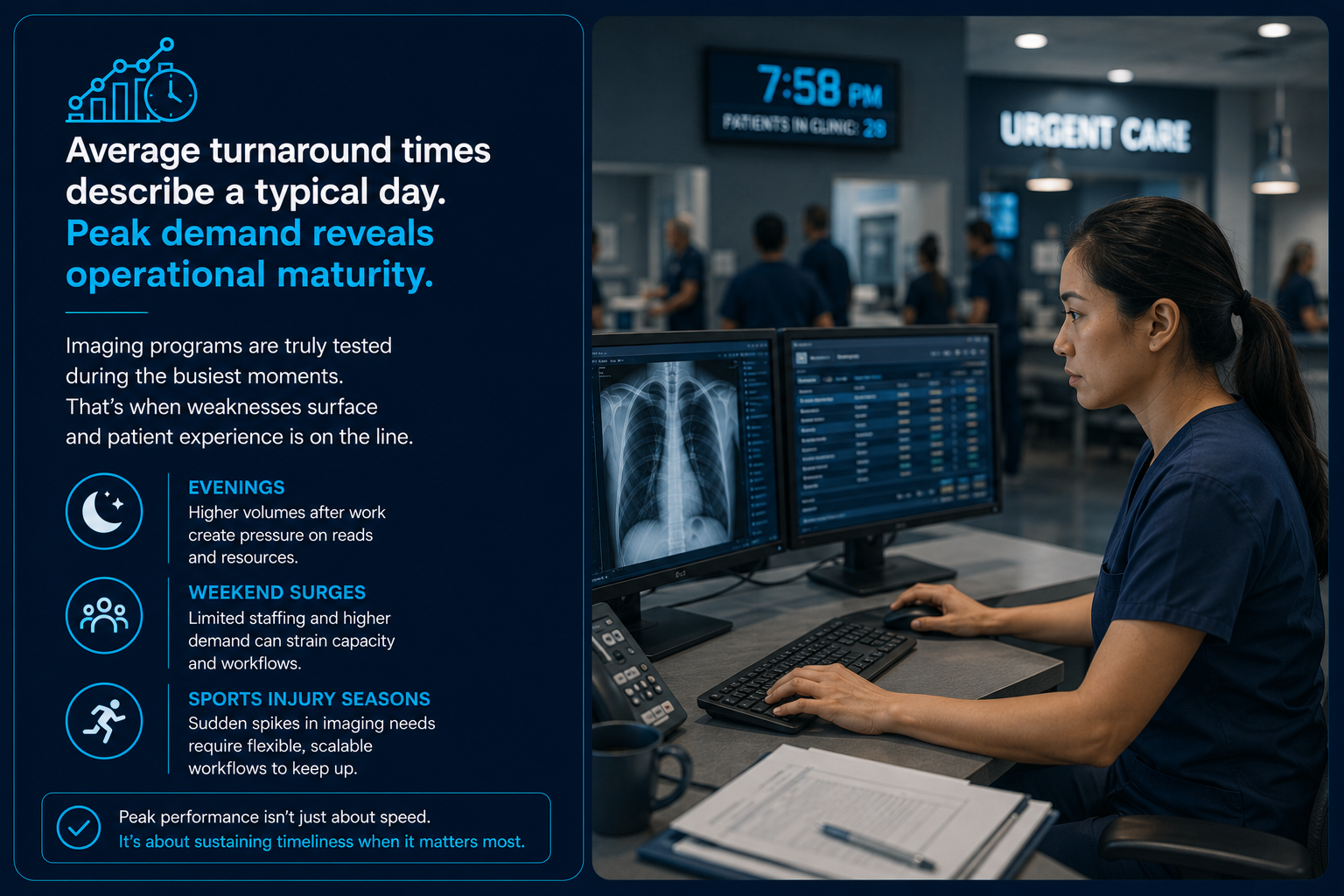
Average turnaround times describe a typical day, but urgent care rarely operates under typical conditions. Busy evenings, seasonal illness, youth sports injuries, and unexpected surges all place additional pressure on imaging workflows. Those periods often determine whether providers continue receiving timely support or begin adjusting their clinical decisions around anticipated delays.
The conversations at Urgent Care Connect 2026 reflected that reality. Attendees described imaging programs that performed well during routine clinic hours before slowing considerably during evening demand. Rather than focusing only on staffing, the discussion expanded into workflow design, operational flexibility, and how imaging teams maintain performance when patient volume changes unexpectedly.
Organizations gain a much clearer understanding of timeliness by studying those periods closely. Performance under pressure often reveals opportunities that remain hidden during routine operations.
Predictability Improves Clinical Decision-Making
Providers rarely expect every report to arrive immediately, but they do expect the workflow to behave consistently. Knowing when an interpretation is likely to arrive influences how providers manage the rest of the visit. Staff can communicate realistic expectations to patients. Clinics can identify where additional capacity is needed before delays become routine. Leadership gains a more accurate understanding of how imaging supports the broader operation.
Healthcare organizations will continue managing growing imaging demand alongside long-term radiologist workforce constraints, increasing the importance of workflows that use available expertise efficiently (pubmed.ncbi.nlm.nih.gov).
Predictability creates confidence because everyone involved understands what to expect.
Questions Worth Asking
Timeliness becomes easier to improve when organizations examine how imaging supports clinical decisions instead of focusing only on turnaround averages.
- How often are providers still waiting for imaging before making treatment decisions?
- When do delays occur most frequently?
- How consistently does imaging perform during evenings and other high-volume periods?
- How often do patients leave before final interpretations are available?
- Which delays affect patient care directly, and which primarily affect work after the visit?
Those questions help leaders understand how time influences the patient experience instead of simply measuring elapsed minutes.
Timeliness Keeps Care Moving
Every imaging workflow exists to support clinical decisions. When providers receive the information they need at the right time, patients spend less time waiting, treatment plans become more efficient, and clinics maintain the steady flow required to meet growing demand.
That perspective places timeliness in its proper context. The objective isn’t simply faster reporting. It’s helping providers make confident decisions while the patient is still in their care.
That is why Timeliness is one of the Five Pillars of Imaging Excellence. Imaging creates the most value when information arrives early enough to influence care, support patient throughput, and reduce the work that follows after the visit has ended.
The imaging programs that create the most value aren’t necessarily the ones with the fastest average turnaround times. They’re the ones that consistently deliver information when providers can still act on it.
How Does Your Imaging Workflow Perform When Timing Matters Most?
Learn how Experity Teleradiology helps urgent care organizations deliver timely interpretations, support providers during peak demand, and keep patient care moving.